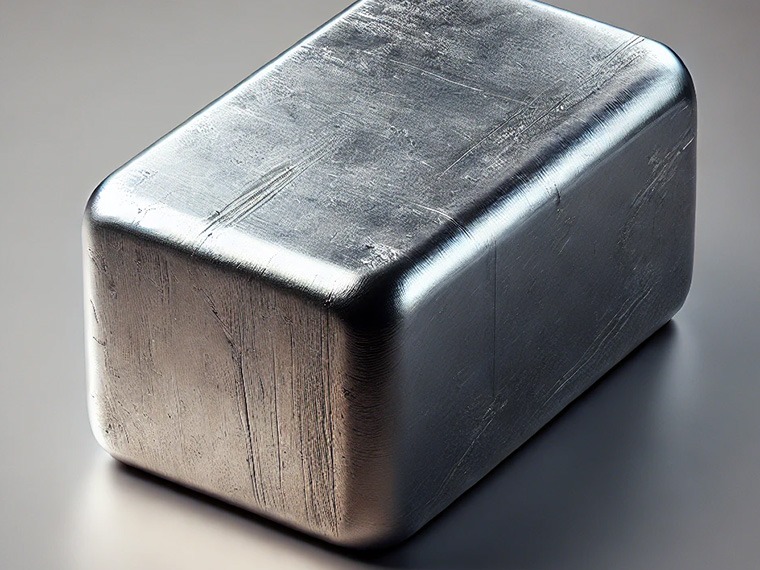
Zirconium (Lat. Zirconium) is a strong yet malleable and ductile, silvery-grey metal with outstanding resistance to heat and corrosion. Zirconium is a relatively poor conductor of heat and a very poor conductor of electricity – roughly 25 times worse than copper. The melting point of zirconium is 1854 °C and its boiling point is 4406 °C.
Zirconium (chemical symbol Zr) is most important for nuclear energy: more than 90 per cent of zirconium is used for nuclear reactor fuel cladding, because it absorbs almost no neutrons. Research shows that small additions of zirconium can improve the stability of the cathodes of some lithium-ion batteries.
Zirconium oxide is used to make a very wide range of everyday and specialised products. It is used both in abrasive products (for grinding the surfaces of various metals and other materials) and in dental implants and crowns. Zirconium is also successfully incorporated into various metal alloys; it can be used to make superconducting magnets, ceramic glaze pigments and glass.
Sources:
https://periodic-table.rsc.org/element/40/zirconium
https://www.britannica.com/science/zirconium
https://www.lenntech.com/periodic/elements/zr.htm
https://pmc.ncbi.nlm.nih.gov/articles/PMC11997945