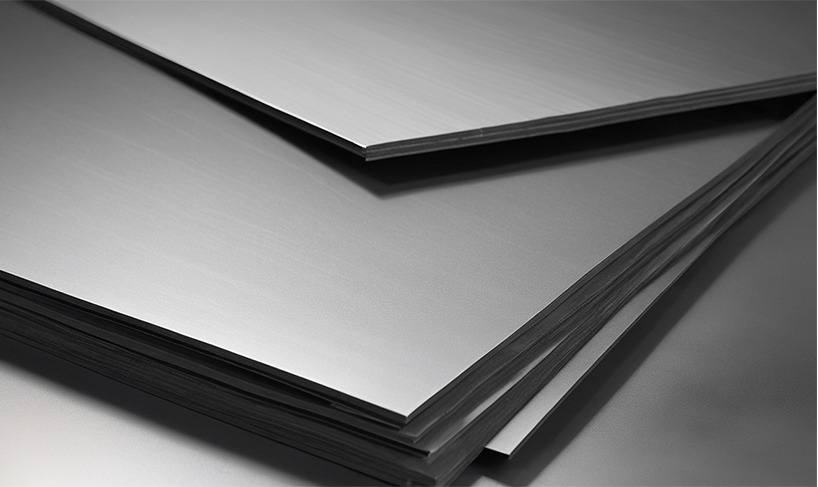
Titanium (Lat. titanium) is one of the most abundant metals in the Earth’s crust (the 9th most abundant element) and has unique physical and chemical properties. It is as strong as steel but much lighter (the density of titanium is 4.5 g/cm³, compared with about 7.8 g/cm³ for steel). Titanium is extremely durable, corrosion-resistant and biocompatible with the human body; it is also ductile and has relatively low electrical conductivity compared with other metals. The melting point of titanium is 1670 °C and its boiling point is 3287 °C.
The exceptional properties of titanium are used in many fields. Because of its biocompatibility, titanium is often chosen for medical implants. It is used in aircraft and spacecraft structures thanks to its exceptional combination of strength and lightness. Titanium can also be found in a wide range of sports equipment – bicycle frames, tennis rackets and golf clubs.
In everyday life, titanium is sometimes found in products such as high-quality spectacle frames and watch cases and bracelets. It is also used in some computers, mobile phones and tablets, for which the combination of strength and lightness is especially important. Titanium is also used in some car engine components and exhaust system parts.
Sources:
https://periodic-table.rsc.org/element/22/titanium
https://www.britannica.com/science/titanium
https://en.wikipedia.org/wiki/Titanium