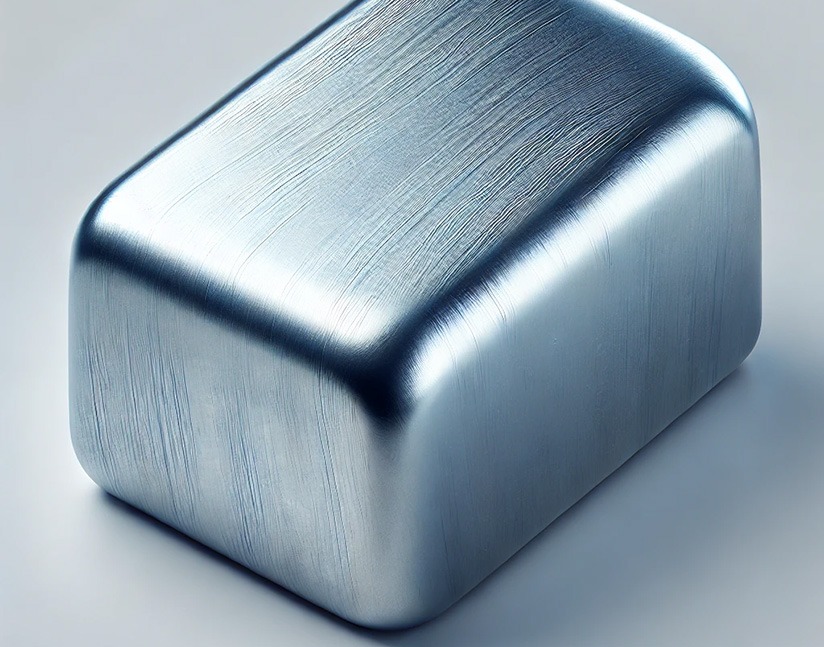
Niobium (Lat. Niobium) is a rare metal found mainly in igneous rocks; according to the USGS, about 93 per cent of the world’s niobium is mined in Brazil. Niobium is soft, malleable and ductile, and is a good conductor of heat and electricity. The melting point of this element is 2477 °C and its boiling point is 4741 °C.
About 90 per cent of mined niobium is processed into ferroniobium, which is used in high-quality steel alloys. These alloys are used in a wide range of fields, such as car manufacturing, energy and aviation. The niobium content of such steels is usually below 0.1 per cent, but it significantly increases the strength of the steel. According to CBMM, the steel of a mid-size car can contain about 300 g of niobium, which helps to reduce the weight of the vehicle.
Niobium (chemical symbol Nb) is also used to make superconducting materials, which conduct electricity without any electrical resistance. Superconducting magnets are used in state-of-the-art equipment – MRI scanners and particle accelerators. Niobium can also be found in components of various everyday electronic products (for example, capacitors). However, the amounts of niobium used in these products are very small.
Sources:
https://periodic-table.rsc.org/element/41/niobium
https://pubs.usgs.gov/periodicals/mcs2026/mcs2026-niobium.pdf
https://niobium.tech/-/media/NiobiumTech/Documentos/2019-Formula-E—Hong-Kong/NT_Niobium-in-advanced-materials.pdf
https://en.wikipedia.org/wiki/Niobium