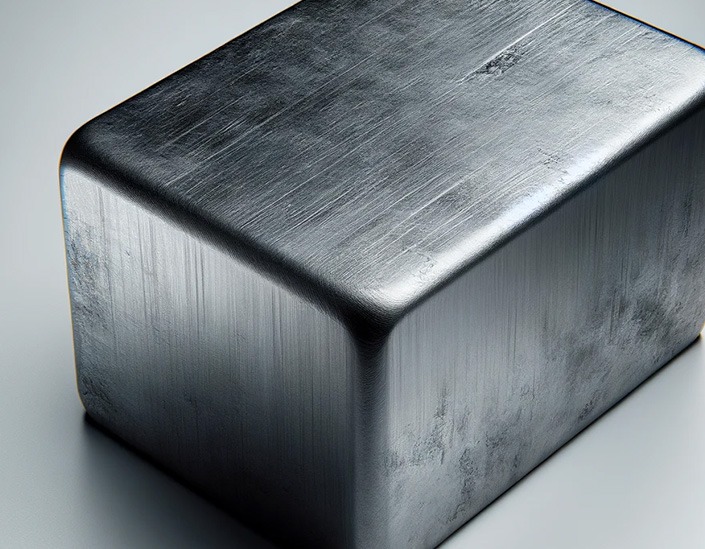
Tungsten (Lat. Wolfram) is a greyish-white, lustrous metal with exceptional strength, high density and heat resistance. Tungsten is one of the densest metals (19.3 g/cm³ – almost the same as gold) and is very difficult to machine. It is resistant to corrosion and to most acids. Because of all these properties, tungsten is often chosen for use in extreme conditions. Its melting point is 3414 °C (the highest of all metals) and its boiling point is 5555 °C.
At first glance tungsten (chemical symbol W) may seem like an element rarely found in everyday life, but in fact it is widely used in many areas. This highly heat-resistant element was formerly used for incandescent light bulb filaments, and today for halogen lamp filaments, welding electrodes and heating elements. Tungsten is also used in electronic components (e.g. interconnects in microchips and electrical contacts). The largest use of tungsten is tungsten carbide, from which very hard tools (drills, cutting tools, milling cutters) are made. Tungsten is also found in specialised areas such as medical equipment (X-ray tubes, radiation shielding) and the manufacture of high-temperature industrial furnaces.
Sources:
https://periodic-table.rsc.org/element/74/tungsten
https://www.usgs.gov/centers/national-minerals-information-center/tungsten-statistics-and-information
https://www.britannica.com/science/tungsten-chemical-element
https://en.wikipedia.org/wiki/Tungsten