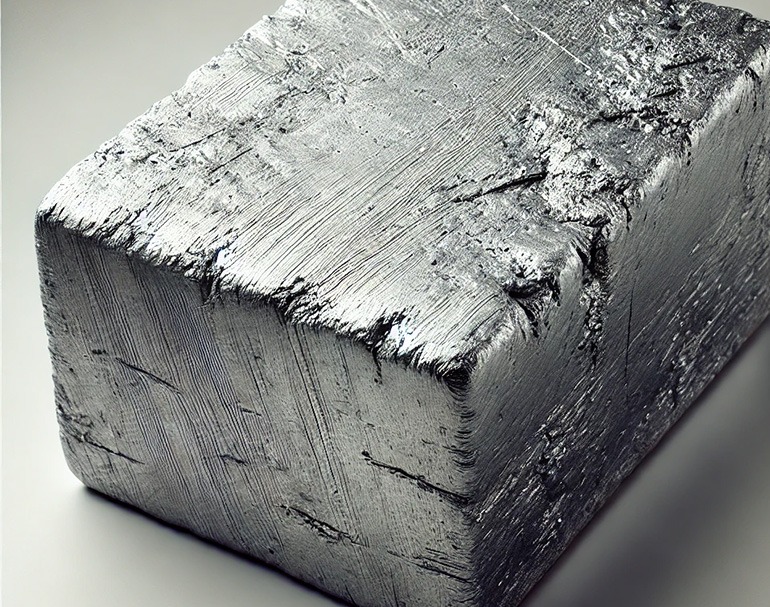
Lead (Lat. Plumbum) is one of the oldest metals used by humankind: it was first smelted as early as the 7th millennium BC and has been mined for more than 6000 years. It is a very soft and easily worked metal that can be forged, rolled and cast. Lead has a high density, good corrosion resistance and relatively poor electrical and thermal conductivity. The melting point of lead is 327.5 °C and its boiling point is 1749 °C.
Lead (chemical symbol Pb) is a toxic metal, so its use is restricted or banned in many industries. Nevertheless, thanks to its durability and resistance to environmental effects, it is still widely used in certain applications. One of the most important is lead-acid batteries: a car battery contains about 8–10 kg of lead, i.e. more than half of its weight.
Because of its high density, lead is used for protection against ionising radiation (e.g. X-rays). It is also used in various alloys. Molten lead can be used in processes for recovering precious metals such as gold and silver.
Sources:
https://periodic-table.rsc.org/element/82/lead
https://www.britannica.com/science/lead-chemical-element
https://www.waste360.com/industry-insights/lead-acid-batteries