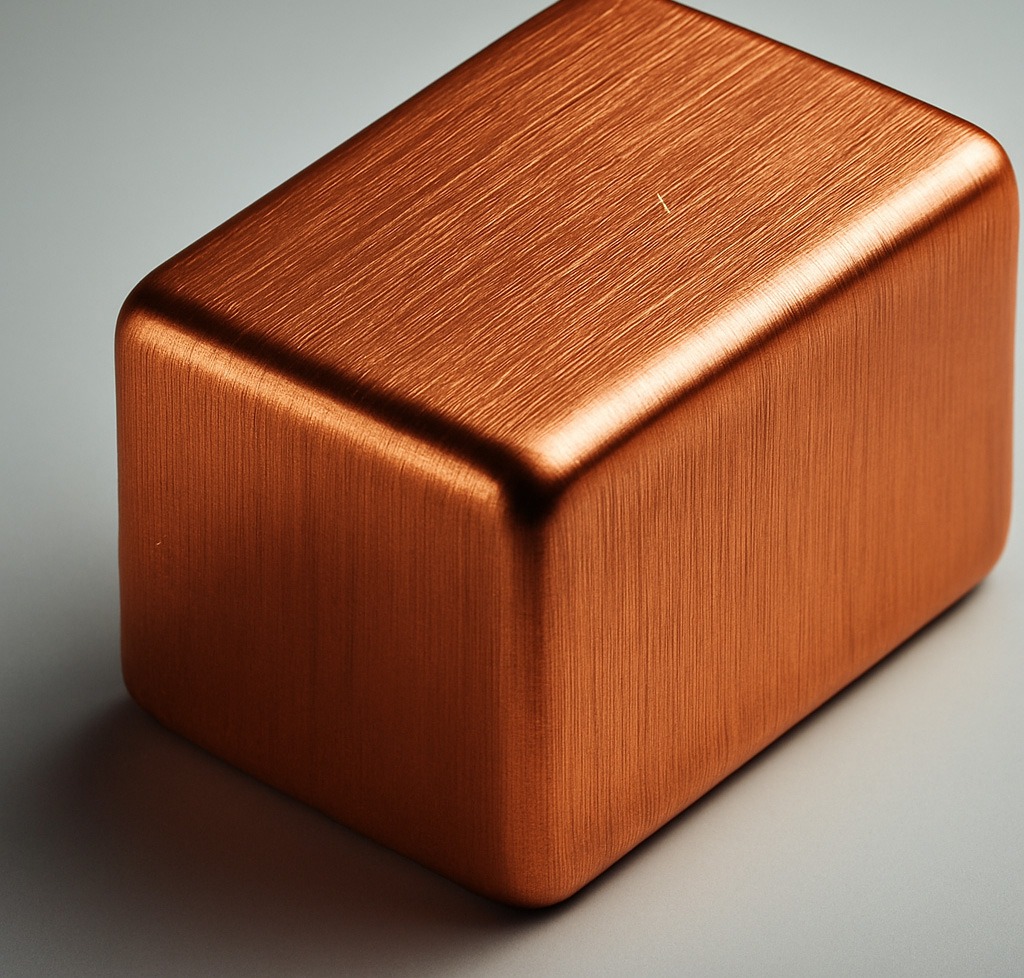
Copper (Lat. Cuprum) is a popular base metal widely used in the manufacture of everyday household goods as well as in the construction and electronics industries. Its popularity is due not only to the abundant global reserves of this metal but also to its physical and chemical properties, which are favourable for production and processing. Copper is a soft, malleable and fusible metal and an excellent conductor of heat and electricity. The melting point of copper is 1085 °C and its boiling point is 2560 °C.
Copper (chemical symbol Cu) is widely used in the construction industry. It can be found in plumbing systems, roofing and, above all, electrical installations. According to the Copper Development Association, the electrical wiring of an average US home contains about 88 kg of copper, and the whole house, including plumbing and appliances, about 200 kg. One metre of copper electrical wire can contain from a dozen to several dozen grams of copper depending on the conductor cross-section (e.g. about 22 g per metre of a 2.5 mm² conductor and about 67 g in a three-core cable).
Copper is also widely used in electrical power transformers – their windings can contain a considerable amount of copper, and its share depends on the type and power of the transformer. In everyday life, larger amounts of copper are also found in refrigerators and washing machines (about 2 kg of copper per appliance according to the Copper Development Association).
Copper is also widely used in the manufacture of vehicles and medical equipment and in the chemical industry. Although it is not a particularly popular choice for investment, copper is quite actively used in jewellery.
Sources:
https://periodic-table.rsc.org/element/29/copper
https://www.copper.org/education/c-facts/home/
https://www.britannica.com/science/copper