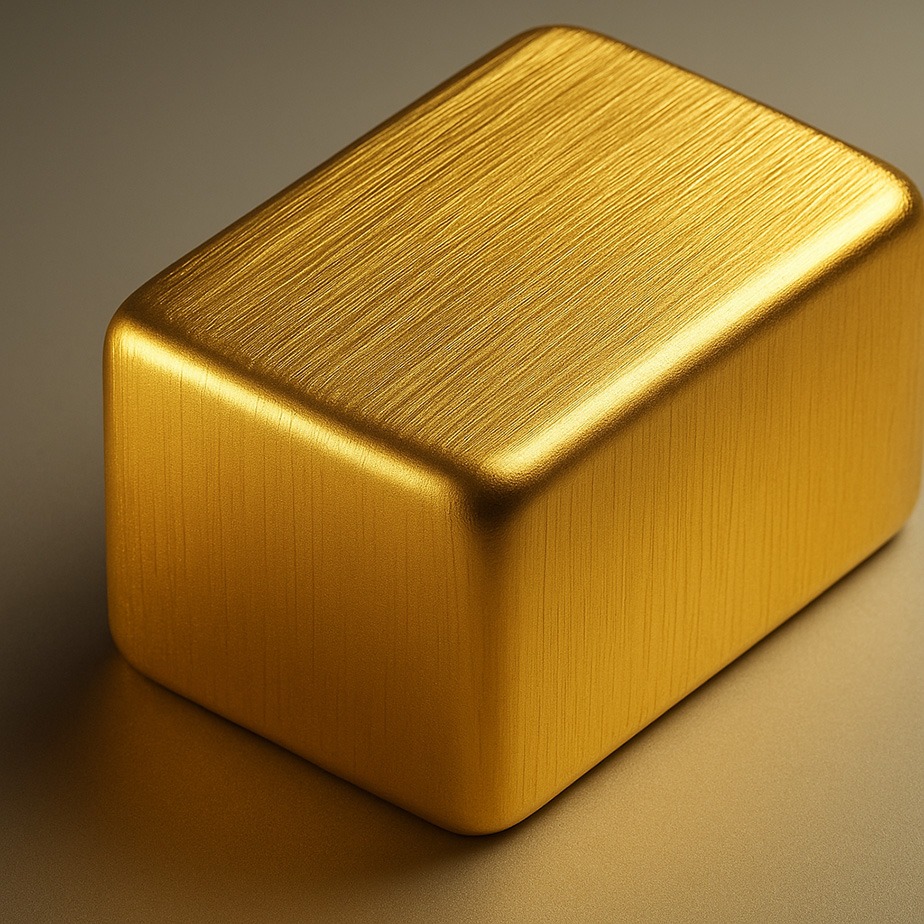
Since ancient times, gold (Lat. Aurum) has been one of the most valued metals due to its attractive appearance and durability. The chemical and physical properties of gold (chemical symbol Au) are truly unique. Its atomic number is 79 and its atomic mass is 196.97. The melting point of gold is 1064 °C and its boiling point is 2836 °C. Pure gold (999 fineness) is known for its bright yellow colour, but larger amounts of impurities noticeably change its shade. The most common impurities found in gold are silver and copper.
Gold is one of the densest metals on Earth (19.3 g/cm³). It is an excellent conductor of electricity and heat and is highly resistant to corrosion. Refined gold is easy to shape and process. Due to these properties, gold is widely used in the electronics industry. As a metal capable of transmitting precise low-power electric currents, it is widely used in the production of contact wires and microchips for telephones, computers, televisions, cameras and similar electronic devices. Gold is also used in dentistry (dental alloys) and in medical electronics. Recycled gold can be successfully used in the manufacture of new devices and jewellery.
Sources:
https://periodic-table.rsc.org/element/79/gold
https://pubs.usgs.gov/periodicals/mcs2026/mcs2026-gold.pdf
https://www.britannica.com/science/gold-chemical-element
https://geology.com/minerals/gold/uses-of-gold.shtml
https://en.wikipedia.org/wiki/Gold