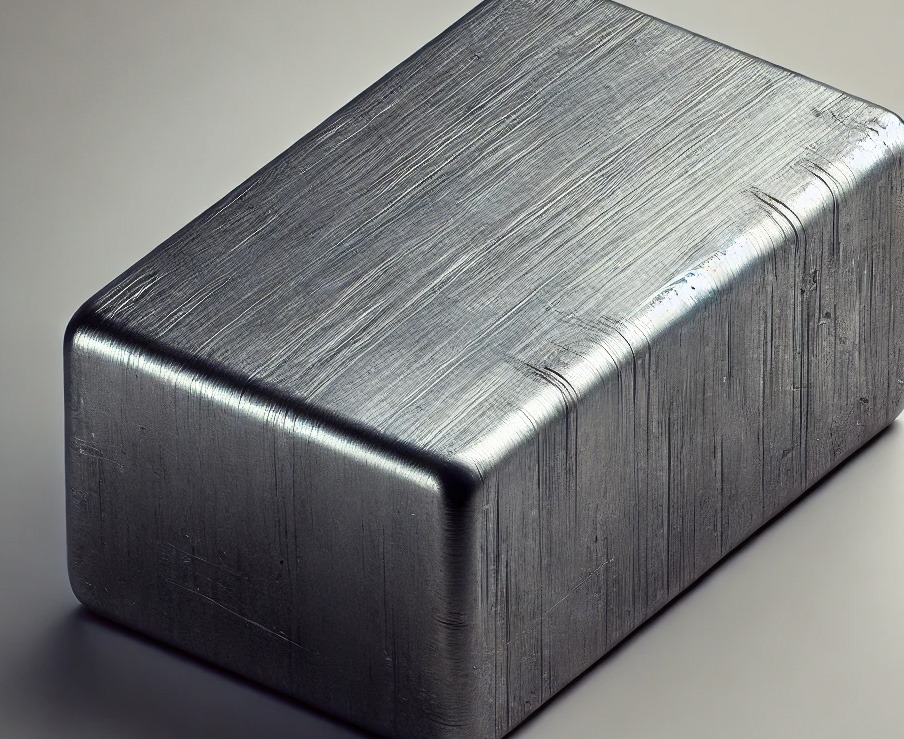
Tantalum (Lat. Tantalum) is a rare, relatively expensive, silvery-grey metal with exceptional corrosion resistance, a high melting point and high density. Tantalum is extremely resistant to acids: below 150 °C it is almost immune even to aqua regia, which dissolves gold and platinum. Tantalum is attacked only by hydrofluoric acid and hot strong alkalis. It is also known for its biocompatibility with human tissue. Its melting point is 3017 °C and its boiling point is 5455 °C.
An important application of tantalum (chemical symbol Ta), in the form of metal powder, is electrical engineering. The metal is used to make capacitors and (sometimes) high-power resistors. Tantalum is also a component of various high-strength alloys (e.g. tantalum-tungsten or tantalum-niobium). Thanks to tantalum’s exceptional heat resistance, parts made from these alloys can be used in aviation and the space industry.
Because of its rarity, relatively high price and specific applications, tantalum is less common in everyday household appliances and items. The amounts of this metal in everyday electronic devices are very small. It is worth noting that, thanks to its unique chemical properties, tantalum is suitable for hypoallergenic jewellery, so it is more often found in jewellery. Tantalum is also used to make special surgical implants (bone and dental implants, cranial plates).
Sources:
https://periodic-table.rsc.org/element/73/tantalum
https://www.tanb.org/about-tantalum
https://en.wikipedia.org/wiki/Tantalum
https://www.britannica.com/science/tantalum