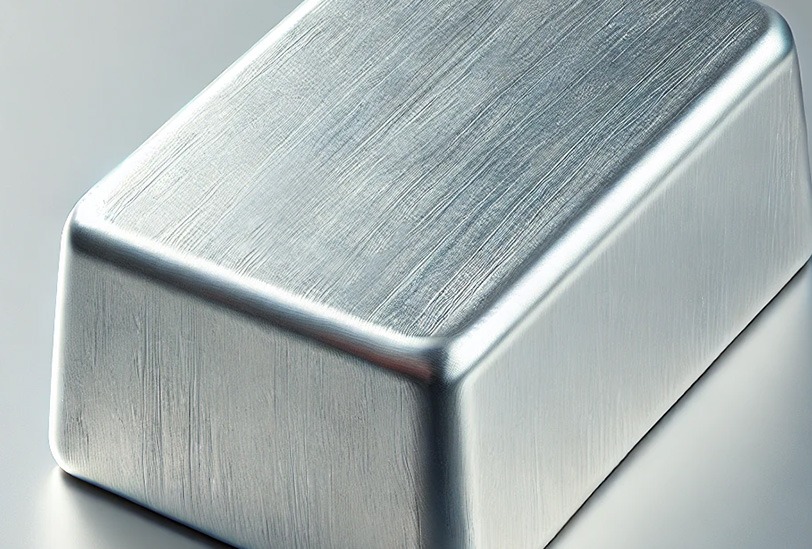
Palladium (Lat. palladium) is a very rare precious metal used today in the automotive and electrical engineering industries and as an investment. This greyish-white metal is ductile and easy to work, yet quite strong. The melting point of palladium is 1554.8 °C and its boiling point is 2963 °C.
Around 17 times less palladium (chemical symbol Pd) than gold is mined worldwide each year (USGS data). It has not only high investment value but also a wide range of practical applications. In everyday life, palladium (together with platinum and rhodium) is best known as one of the components of automotive catalytic converters. A petrol car catalytic converter contains on average about 4–6 grams of palladium, depending on the size and model (US Department of Energy data).
Owing to its durability, corrosion resistance and excellent electrical conductivity, palladium used to be widely used in various electronic devices. In electronics (e.g. ceramic capacitors) palladium has been partly replaced by cheaper metals, but it can still be found in computers and phones, especially more expensive or older models. Palladium and its alloys are also used in medical instruments, watchmaking and dentistry.
Sources:
https://periodic-table.rsc.org/element/46/palladium
https://pubs.usgs.gov/periodicals/mcs2026/mcs2026-platinum-group.pdf
https://www.hydrogen.energy.gov/pdfs/16006_pgm_light_duty_vehicles.pdf
https://matthey.com/pgm-markets
https://en.wikipedia.org/wiki/Palladium