When a material contains gold, silver, platinum, palladium or other valuable metals, weight alone is not enough to determine its value. It is important to know which metals are present and at what concentrations.
NOVITERA uses different analytical methods for this purpose. Two of the key methods are XRF spectrometric analysis and ICP-OES chemical analysis. How do they differ, when are they used, and why is proper sample preparation as important as the analysis itself?
What is XRF analysis and what is it used for?
XRF (X-ray fluorescence) analysis is a fast, non-destructive method used to assess the elemental composition of a material.
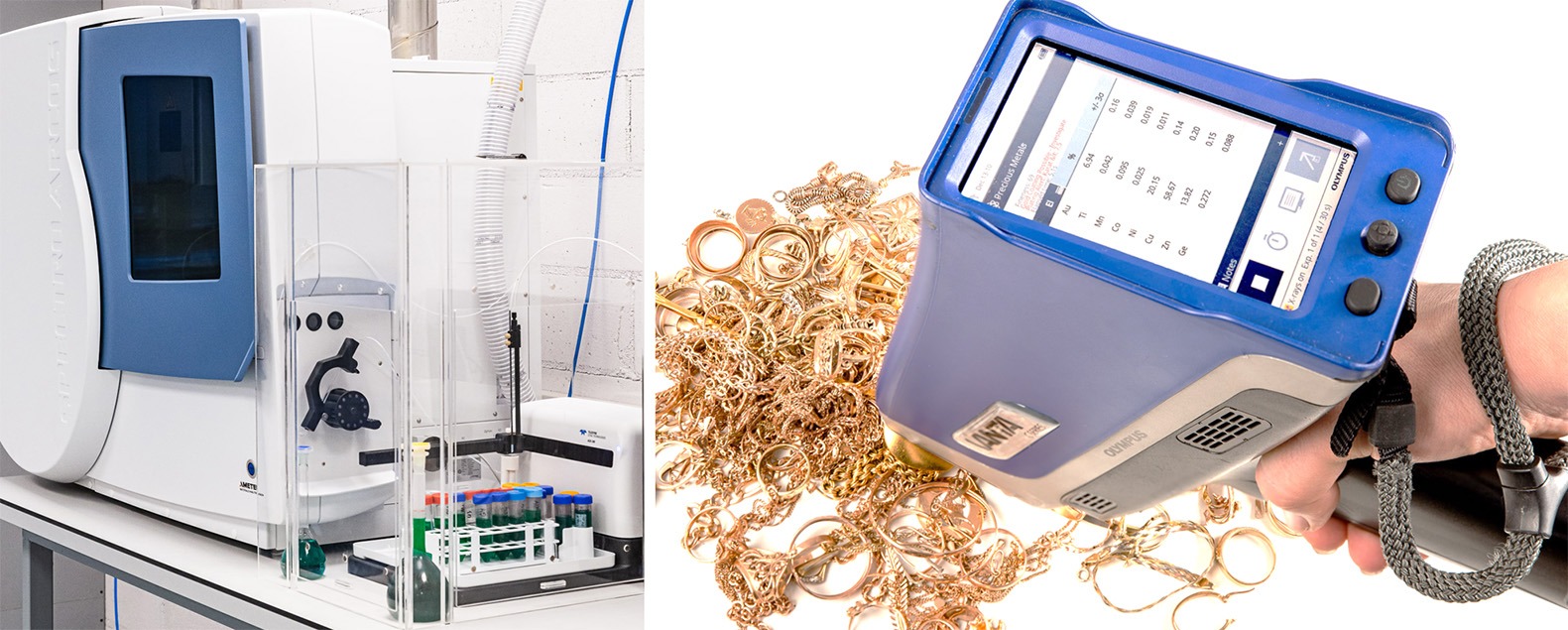
At NOVITERA, materials can be tested using a Vanta XRF analyser. The analyser directs X-rays at the material and uses the signals emitted by different chemical elements to identify which elements are present and their approximate concentrations.
Results can be obtained within seconds, and no chemical sample preparation is required. This makes XRF particularly useful for initial material assessment, alloy identification and sorting.
What are the limitations of XRF analysis?
XRF analyses a specific area and the surface layer of the material, so a single measurement may not always represent the composition of an entire batch.
This is particularly important for heterogeneous materials or when the metal concentration throughout a batch needs to be determined with high accuracy. In such cases, representative sample preparation and laboratory analysis are required.
What is ICP-OES analysis?
ICP-OES is a laboratory method used for the accurate quantitative determination of specific metal concentrations in a prepared sample.
ICP-OES stands for Inductively Coupled Plasma Optical Emission Spectrometry. A prepared sample is converted into a solution and introduced into extremely high-temperature plasma.
The atoms of different chemical elements emit characteristic radiation – like a unique light “fingerprint”. The spectrometer measures this radiation to determine which elements are present and their precise concentrations.
At the NOVITERA laboratory, ICP-OES is used to determine Au, Pt, Pd and Rh in analysed materials with precision down to parts per million (ppm).
What is the difference between XRF and ICP-OES?
The main differences are analysis speed, sample preparation and the type of result obtained.
XRF quickly identifies the elements present in the tested area and provides an approximate indication of their concentrations. It is non-destructive and requires no chemical sample preparation.
ICP-OES is performed in a laboratory using a prepared representative sample and is used for accurate quantitative determination of specific metals.
The two methods therefore complement rather than compete with each other.
Why is proper sample preparation important?
Proper sample preparation helps ensure that the analytical result accurately represents the composition of the material or batch as a whole.
For example, precious metals may be unevenly distributed throughout a batch of shredded electronic components. Testing one randomly selected fragment may therefore not represent the entire batch.
For heterogeneous materials, the complete process is important:
material preparation → homogenisation → representative sampling → laboratory analysis
How is the appropriate analytical method selected?
The method is selected according to the type, homogeneity and value of the material, the expected economic benefit and the level of accuracy required.
In some cases, a rapid XRF assessment is sufficient. In others, sample preparation followed by comprehensive ICP-OES laboratory analysis is required.
Why is accurate metal analysis important for material valuation?
Accurate composition data makes it possible to determine the quantity of valuable metals present and calculate the material’s value on a reliable basis.
In metal purchasing, even a few percentage points or fractions of a percentage point can make a significant difference in value, particularly for precious metals.
Accurate composition → accurate quantity of valuable metal → reliable material valuation
Want to know the composition of your material?
Request a material analysis or consult the NOVITERA laboratory specialists: [email protected]
Learn more about our laboratory services and testing fees: novitera.lt/en/services
SUBSCRIBE TO OUR NEWSLETTER and stay updated on metal prices and market insights!
By providing my email address, I confirm that I agree to receive newsletters and that my data will be processed for direct marketing purposes in accordance with NOVITERA’s privacy policy. I can unsubscribe at any time by clicking the link at the bottom of the newsletter.