Metal recycling and precious metal recovery are important not only for recovering the economic value of waste. By returning already extracted metals to the production cycle, we can reduce demand for primary raw materials, lower energy consumption and reduce associated CO₂ emissions.
Gold, silver and other valuable metals can either be extracted from primary resources or recovered by recycling electronic waste, spent catalysts, metalworking and manufacturing waste, and other industrial waste streams.
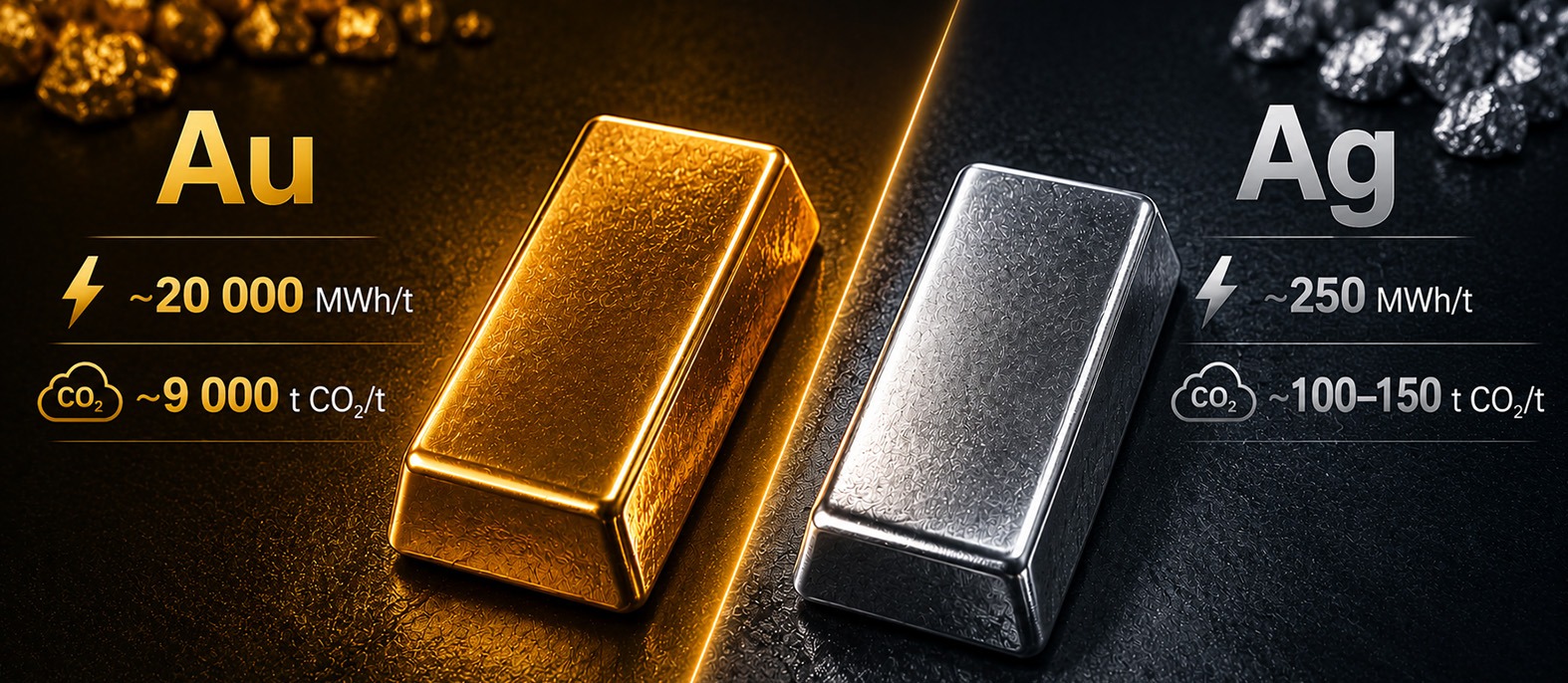
How significant can the difference be? Various research models provide estimates of the energy requirements and CO₂ emissions associated with producing one tonne of gold or silver from primary and secondary resources.
Primary metal extraction or recovery from waste?
Au | Gold
| Primary mining | Recycling | |
|---|---|---|
| ⚡ Energy consumption | ~20,000 MWh/t | ~164–195 MWh/t |
| 🌍 CO₂ emissions | ~9,000 t CO₂e/t | ~36–43 t CO₂e/t |
Ag | Silver
| Primary mining | Recycling | |
|---|---|---|
| ⚡ Energy consumption | ~250 MWh/t | ~49 MWh/t |
| 🌍 CO₂ emissions | ~100–150 t CO₂e/t | ~11 t CO₂e/t |
The difference is significant.
By efficiently recovering Au, Ag, Pt, Pd and other valuable metals from electronic waste, spent catalysts, industrial waste and other secondary materials, and returning them to the production cycle, we can reduce the need to obtain the same resources from primary raw materials.
Why is precious metal recycling important for the environment?
Metal recycling helps keep already extracted resources in circulation for longer while reducing the need for new mining and its associated environmental impact.
This is particularly important for precious metals. Gold, silver, platinum and palladium can be recovered from a wide range of secondary materials and returned to manufacturing processes.
In the context of climate change and growing demand for raw materials, making efficient use of resources already in circulation is becoming increasingly important. Recovering precious metals from waste is therefore not only a way to recover their economic value, but also an important part of the circular economy.
What types of waste can contain valuable metals?
Valuable metals can be found in many waste streams generated by businesses and industrial operations, including:
• waste electrical and electronic equipment (WEEE);
• printed circuit boards and electronic components;
• cables and wires;
• spent catalysts;
• metalworking and manufacturing waste;
• precious metal-bearing alloys;
• ashes, slags and other metal-bearing industrial materials.
It is therefore important not only to send these materials for recycling, but also to accurately determine their composition and select the appropriate metal recovery process. The composition of the material, its precious metal content and the way it is prepared for processing can all affect its final value.
Your waste – your contribution to the circular economy
By choosing responsible metal recycling, you do more than recover the value of the metals contained in your waste. You also contribute to the more efficient use of already extracted resources, lower demand for primary raw materials and reduced environmental impact.
Every amount of gold, silver, platinum, palladium or another valuable metal returned to the production cycle enables an existing resource to be used again.
Together, we turn waste into value. ♻️
Metal recovery and laboratory analysis
NOVITERA specialises in the recovery of more than 30 different metals and in laboratory material analysis.
If your operations generate electronic waste, cables, metalworking or manufacturing waste, or other industrial materials that may contain precious or other valuable metals, contact us. We can help determine the material composition, assess its metal recovery potential and identify the most suitable processing method.
Sources: Thunder Said Energy; C.HAFNER / INEC & treeze – Life Cycle Assessment and Carbon Footprint of Precious Metal Recycling.
The figures are based on different assessment models and system boundaries and are therefore intended to illustrate the scale of the difference rather than provide a direct like-for-like comparison.
SUBSCRIBE TO OUR NEWSLETTER and stay updated on metal prices and market insights!
By providing my email address, I confirm that I agree to receive newsletters and that my data will be processed for direct marketing purposes in accordance with NOVITERA’s privacy policy. I can unsubscribe at any time by clicking the link at the bottom of the newsletter.