November 17, 2026
Market Overview 11-11-2026 to 17-11-2026
Precious Metals Market – Further Price Declines
Last week, the major precious metals markets experienced a decline in prices. Investor caution is being driven by the strengthening US dollar and interest rate forecasts, both of which are unfavourable for precious metals, as well as geopolitical challenges in the Middle East. However, when forecasting future inflation scenarios and energy resource prices, some experts are sharing somewhat unexpected insights.
Between 11 and 17 November, the global gold price fell by more than 3.2%, reaching USD 3,858 per troy ounce.
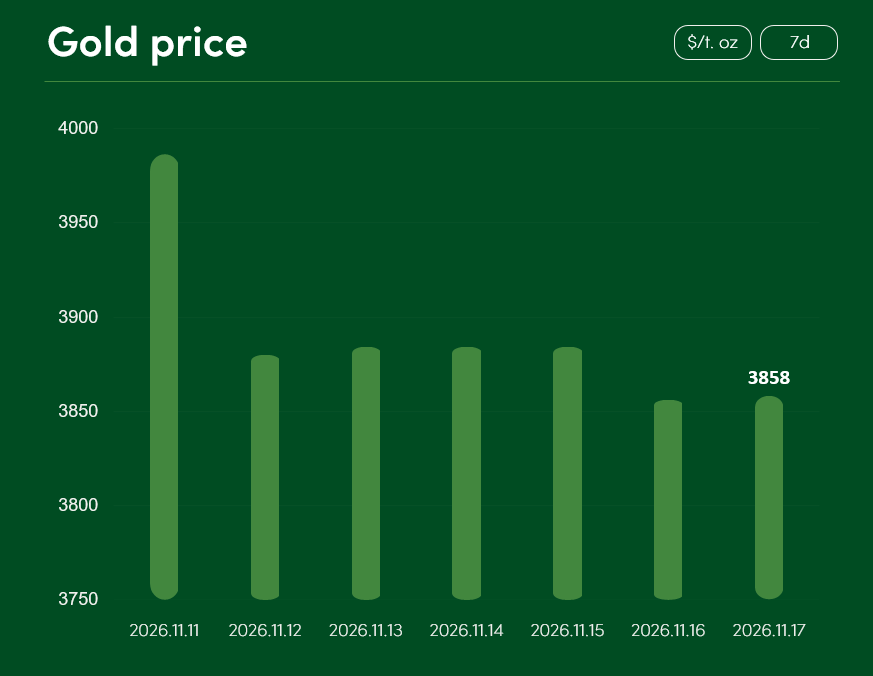
The decline in gold and other precious metals prices is partly driven by the strengthening US dollar. With the dollar reaching its highest level in the past 19 months, precious metals denominated in this currency (gold, silver and others) are becoming less attractive investment options for holders of foreign currencies.
The strengthening US dollar, rising US government bond yields and the direct competition between these assets and precious metals are being driven by US interest rate policy. Given rising US inflation and strong non-farm payroll figures, there is now little doubt that the Federal Reserve will raise interest rates at its next meeting in December.
According to calculations based on financial market data, there is a probability of more than 95% that the Federal Reserve will raise interest rates by 25 basis points in December. There is also an estimated probability of around 4% that the Fed will raise interest rates by as much as 50 basis points at its December meeting. If either of these scenarios materialises, rising interest rates could encourage further strengthening of the US dollar, higher US government bond yields and greater competitive pressure on precious metals assets that do not generate fixed income.
Between 11 and 17 November, the global silver price fell by more than 8.1%, reaching USD 47.46 per troy ounce.
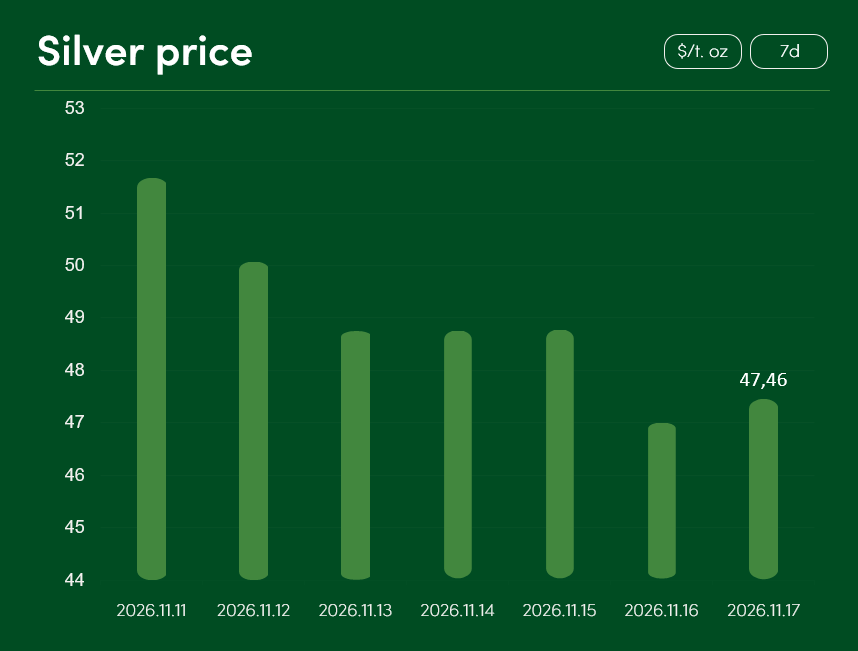
The decline in silver prices is being significantly influenced by both the strengthening US dollar and the increasingly likely prospect of a Federal Reserve interest rate increase in December.
Central banks across various markets have recently been raising interest rates to bring rising inflation under control. The war in the Middle East and the increase in oil prices resulting from US–Iran military operations have recently been major contributors to rising inflation.
On the other hand, as the world fears a global energy crisis, high inflation and a downturn in stock markets, analysts are sharing insights that contradict the prevailing chaotic sentiment. If these forecasts materialise, they could theoretically contribute to rising precious metals prices.
The International Energy Agency forecasts that a supply surplus will emerge in the global oil market as early as the fourth quarter of this year. The International Energy Agency also forecasts that the oil market supply surplus will reach as much as 3.8 million barrels per day in 2027.
Representatives of Goldman Sachs are also warning of a potential oil supply surplus. According to their forecasts, global oil supply will exceed demand by approximately 2 million barrels per day in 2027. Notably, this forecast already accounts for potential oil supply disruptions of 1 million barrels per day.
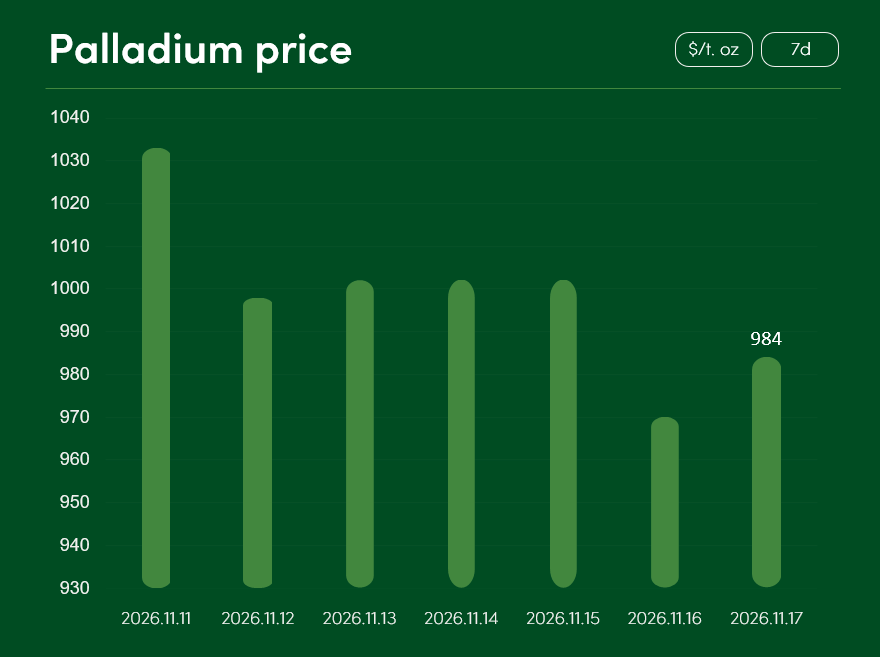
Between 11 and 17 November, the palladium price fell by more than 4.7%, reaching USD 984 per troy ounce.
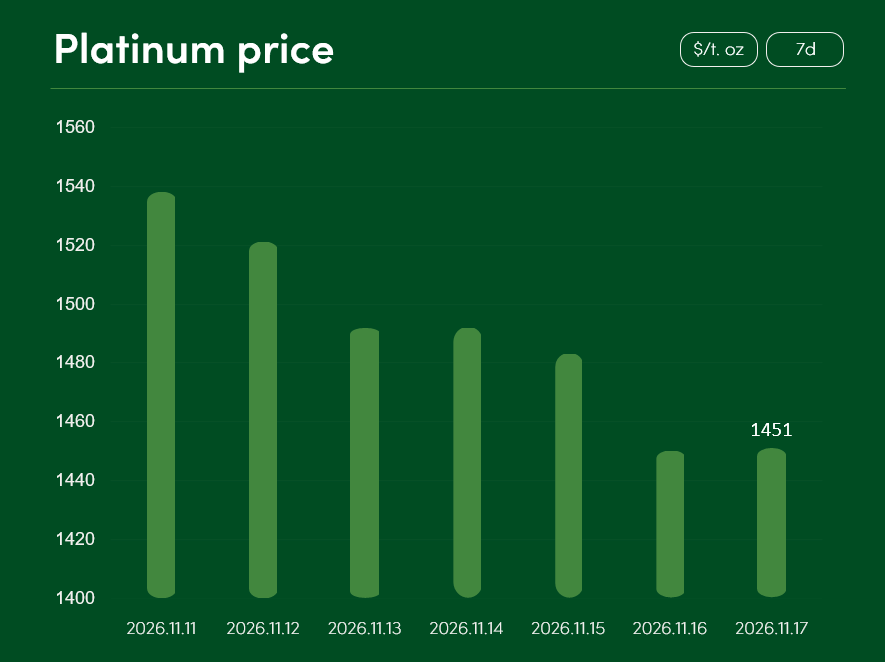
Over the same period, the global platinum price fell by more than 5.6%, reaching USD 1,451 per troy ounce.
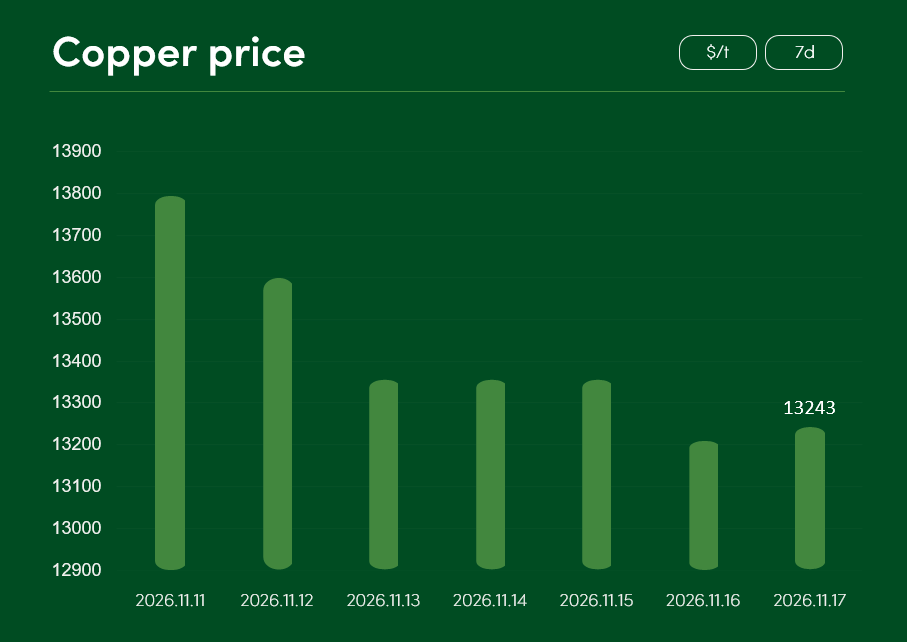
Between 11 and 17 November, the global copper price decreased by approximately 4%, reaching USD 13,243 per tonne.
SUBSCRIBE TO OUR NEWSLETTER and stay updated on metal prices and market insights!
By providing my email address, I confirm that I agree to receive newsletters and that my data will be processed for direct marketing purposes in accordance with NOVITERA’s privacy policy. I can unsubscribe at any time by clicking the link at the bottom of the newsletter.