March 3, 2026
Market Overview 25-02-2026 to 03-03-2026
Chaos in the Precious Metals Market
Last week, the major precious metals markets reacted very differently to the latest crises and emerging threats. Rising tensions in the Middle East fuelled growth in the US dollar exchange rate and oil prices, contributing to increasingly unpredictable price movements in precious metals.
While gold recorded a more pronounced price increase, silver investors are observing a sharper correction. The financial world is anxiously awaiting clear signals that would help determine the further course of geopolitical crises.
The global gold price increased by more than 2.7% from February 25 to March 3, reaching USD 5,308 per troy ounce. The average gold price in February stood at USD 5,019 per troy ounce.
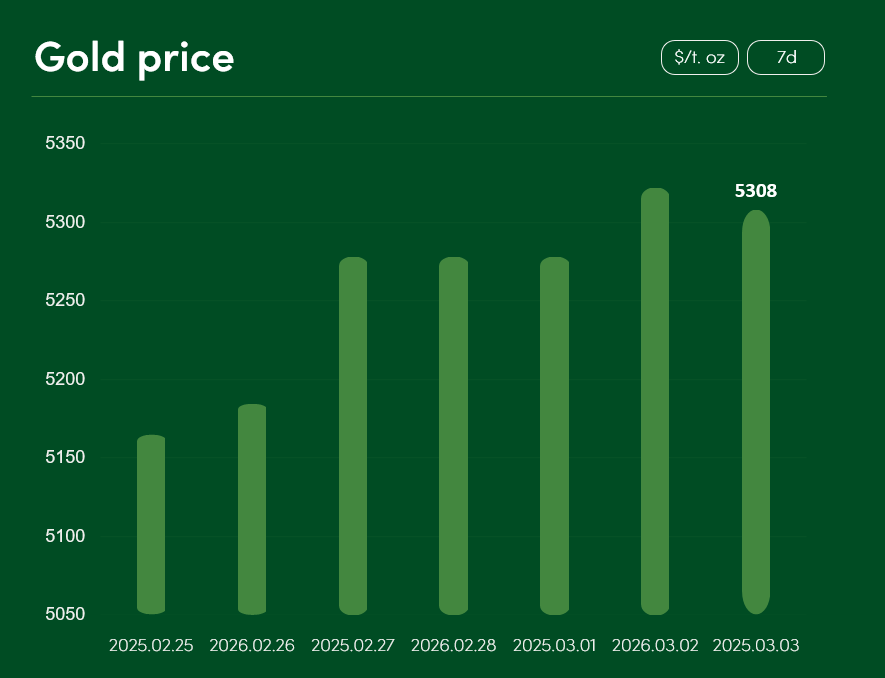
The escalation of conflict in the Middle East undoubtedly contributed to the rise in gold prices. After the US and Israel attacked targets in Iran, Tehran responded with missile strikes against Israel and US military bases located in the Middle East. Following the killing of Iran’s Supreme Leader Ali Khamenei during joint US-Israeli missile strikes, tensions in the region escalated even further. As the world fears a large-scale war, demand for gold as the primary precious metal increased significantly.
The global silver price declined by more than 3% to USD 86.52 per troy ounce. The average silver price in February was USD 82.55 per troy ounce.
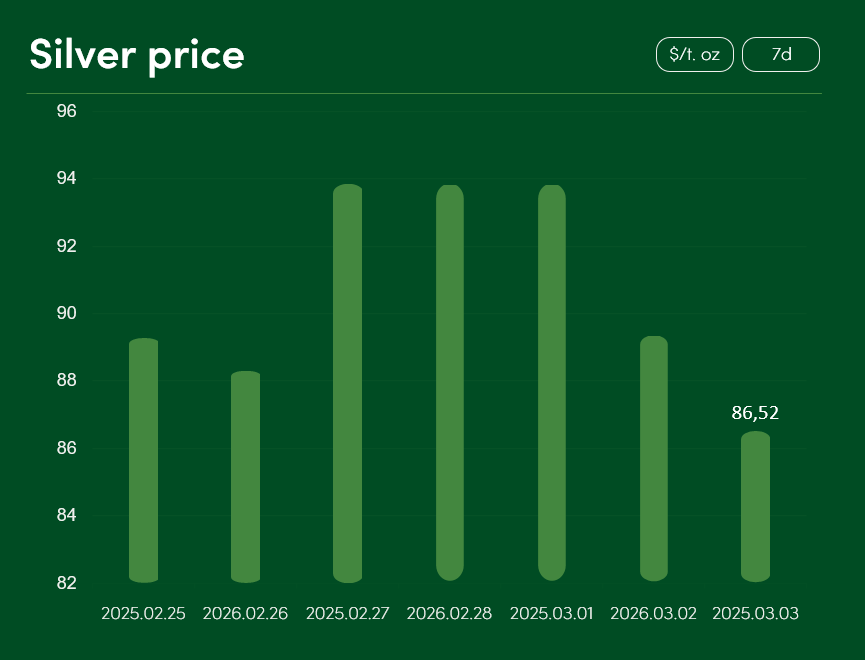
The unexpected correction in silver prices can partly be explained by the financial consequences of the Middle East crisis. As tensions and the number of military attacks increase, the US dollar — the world’s primary reserve currency — strengthens. For silver, whose prices surged to record levels earlier this year, this scenario is particularly unfavorable. Silver — a precious metal denominated in US dollars in global markets — automatically becomes less attractive for holders of foreign currencies.
The tense situation in the oil production and supply chain may have also indirectly contributed to the correction in silver prices. As a precious metal, silver reacts not only to increased demand for safe investment solutions. Its price strongly depends on industrial production and expansion prospects, as well as the overall economic condition of the United States.
Due to the US-Israel-Iran military conflict, disruptions in the oil production and supply chain are being recorded in the Middle East region. After Iran closed the Strait of Hormuz — the main oil transportation route in the Persian Gulf — the world fears that this may trigger an even greater spike in oil prices and contribute to rising inflation in the US and other countries.
Recent disruptions in the oil supply sector have reduced the probability of Federal Reserve interest rate cuts. This outcome also contributes to the strengthening of the US dollar and declining silver demand among foreign currency holders.
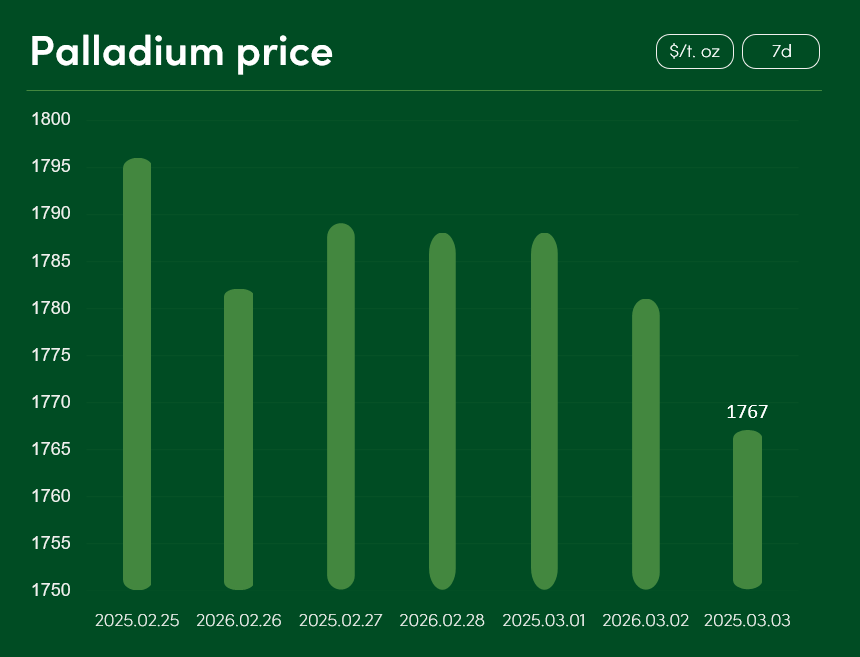
The global palladium price fell by more than 1.5% from February 25 to March 3, reaching USD 1,767 per troy ounce. The average palladium price in February stood at USD 1,734 per troy ounce.
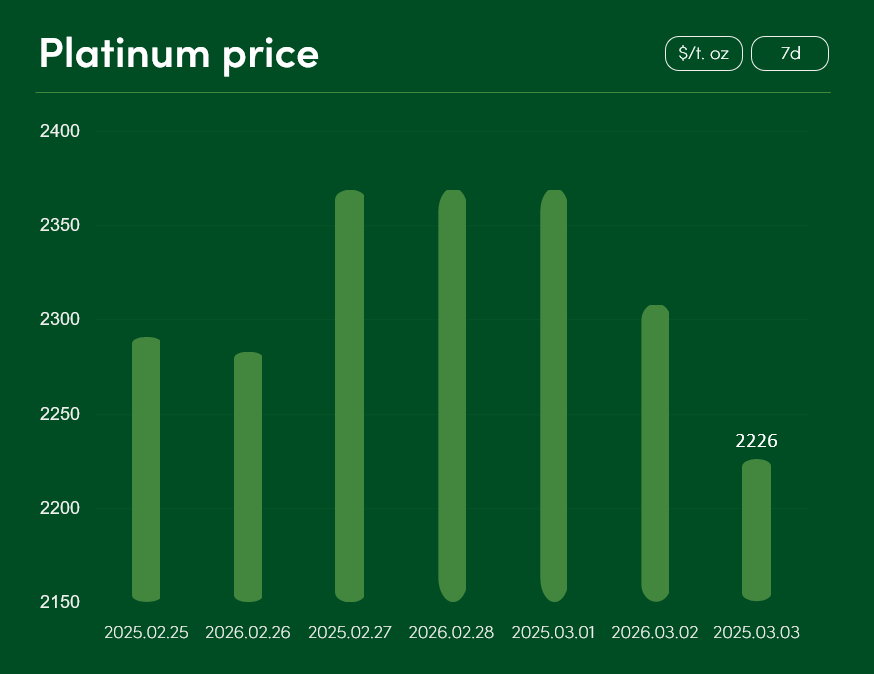
The global platinum price decreased by 2.8% during the same period, reaching USD 2,226 per troy ounce. The average platinum price in February was USD 2,140 per troy ounce.
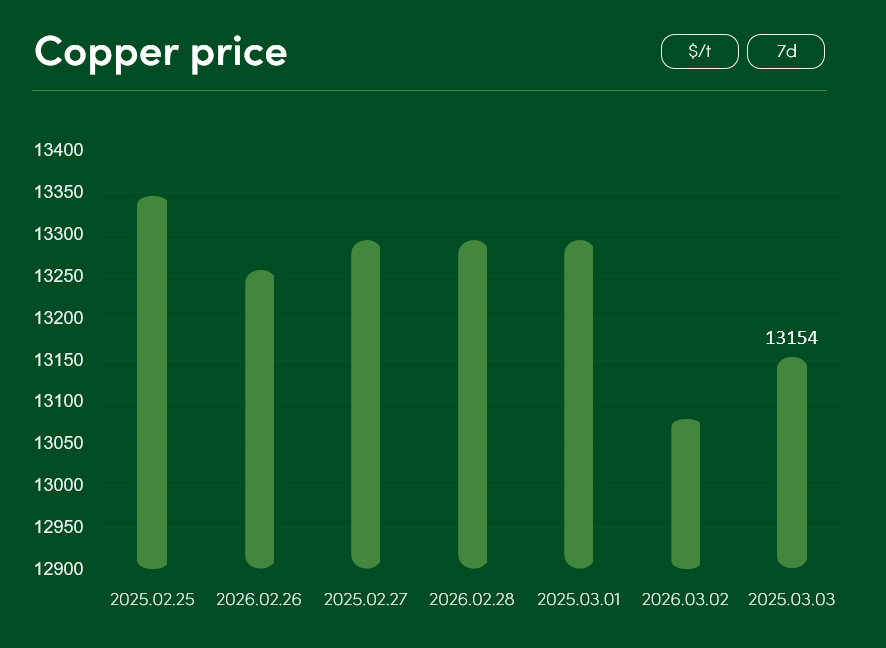
The global copper price declined by more than 1.4% from February 25 to March 3, reaching USD 13,154 per tonne.
SUBSCRIBE TO OUR NEWSLETTER and stay updated on metal prices and market insights!
By providing my email address, I confirm that I agree to receive newsletters and that my data will be processed for direct marketing purposes in accordance with NOVITERA’s privacy policy. I can unsubscribe at any time by clicking the link at the bottom of the newsletter.